



Explore Solutions
Ideas to shift perspectives and paradigms.
Guide to the Page
This page has solutions for everyone.
Indigenous philosophies, generations of academic work, environmental advocacy, and the results of scientific research have laid the foundation for great change. We hope the ideas on SoCal Earth can help to localize this change by empowering people and communities with data and tools at this pivotal time in planetary history.
Finding joy, community, creativity, and connection to our landscape will nourish us as we find a new pathway forward.
- Making Sense of It All: Where to Focus Our Efforts
- Climate Change and Biodiversity Are Bookends to All Earth's Systems
- Key Topics, Key Solutions
- Approaching Solutions
- Scalable Solutions
- Featured Explorations
- Regeneration, Not Extraction!
- Toward a Circular Economy
- More of Our Favorite Models
- Band-Aids vs. Faucets
- Business Unusual: Invest | Divest
- Keywords for Climate Crisis

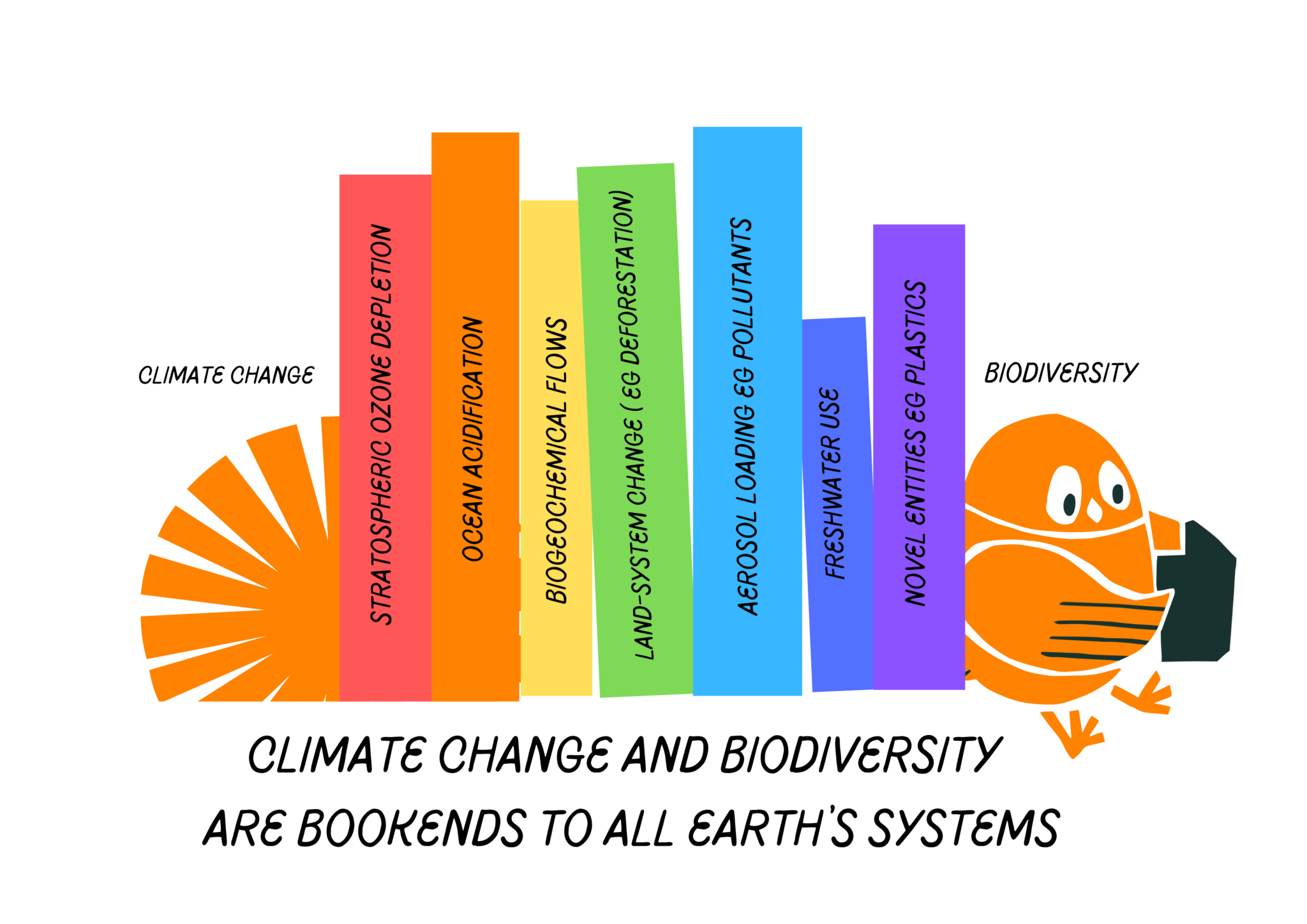
The titles of the books above are the nine planetary boundaries that we must respect in order to preserve life on the planet. You do not have to know what these terms mean in order to make change. If you are curious to learn more, we recommend that you watch the TedTalks of Johan Röckstrom and visit the website of the Stockholm Resilience Center to learn about the planetary boundaries concept that partly inspired our project. Their academic papers contain a wealth of information--and very specific metrics and goals for how we need to reframe our priorities.
- Prevent climate change and improve biodiversity on land and ocean, and everything else will follow.
- See earth's systems as extensions of ourselves, earth's creatures as our kin, and earth as our only home.
- Be like a bookend. Hold up the values and actions that put community and climate first in order to preserve life for ourselves and the planet.
Key Topics, Key Solutions
We generally don't tell people what they need to do to make change. We believe that people's intimate knowledge of their world gives them the ability to determine appropriate courses of action.
Our job is to give people tools and data to think with. Below are key takeaways from all of our pages.
And because people ask us all the time what they should do, we have created some suggestions, ideas, directions, and scalable solutions. Start with the flip cards below and continue on down the page....
Biodiversity
Conserve habitat above all else. Fight for a proprotional approach to 30x30 or 50x50 (see biodiversity section) on the planet as well as in your own city and community.
Indigenous Perspectives
Land back to Indigenous partners will also preserve native habitats and will expand the views of Indigenous people that prioritize kinship with the earth and all its creatures.
Water
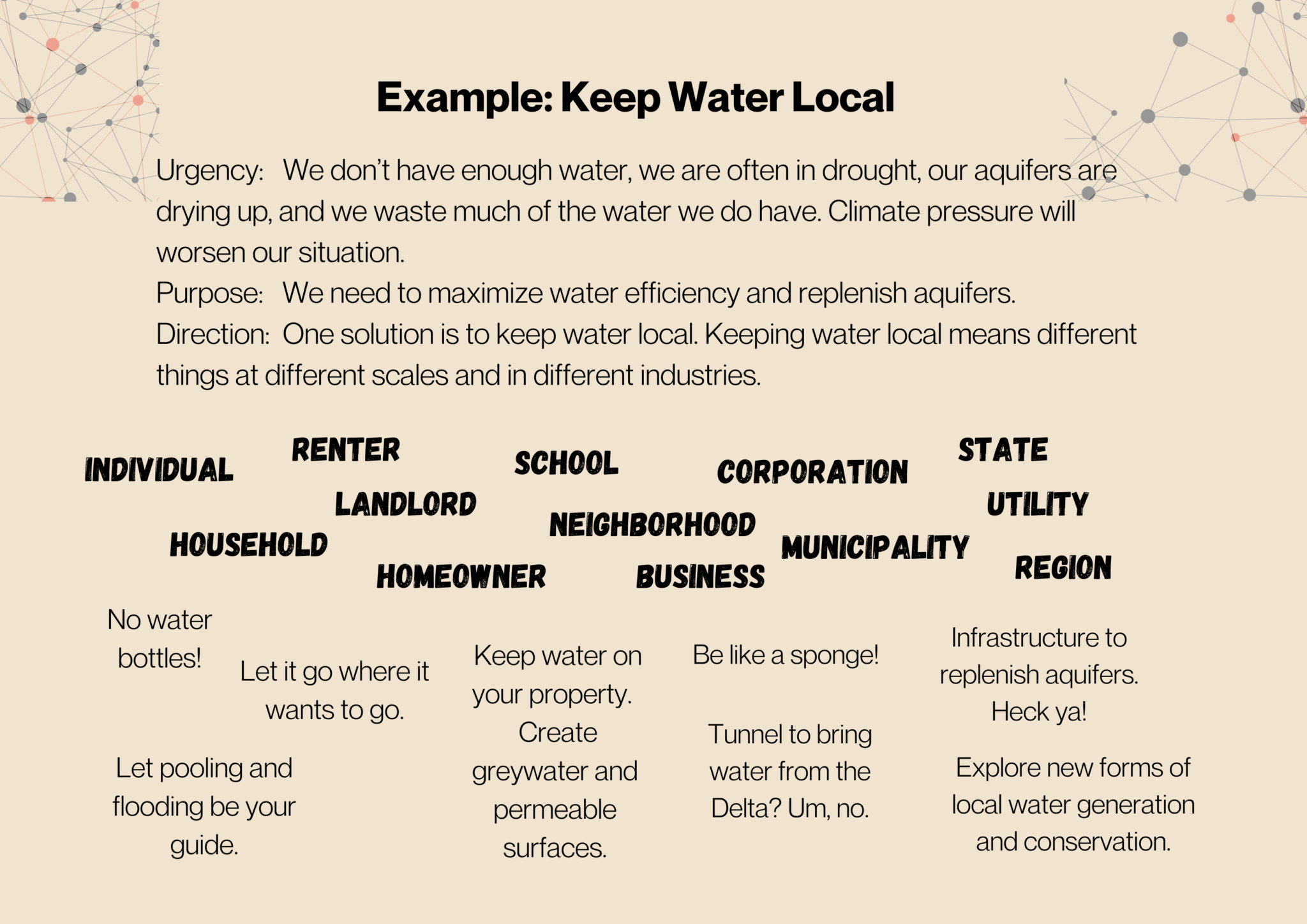
Increase percolation to feed aquifers. Stop trapping water outside of the water system by using water bottles. Explore solutions: fog catchers, atmospheric water generation, and everything from grey water to swales.
Climate
Imagine a fossil fuel free future. Reject any climate solution that bolsters fossil fuels. Phase out natural gas. Invest in nature-based solutions first. Be careful that technological solutions do not reproduce patterns and harms.
Food
Build a local food system. Support the creation of positions and institutions whose sole focus is securing a reliable food supply in the case of supply chain breakdown. To relocalize food, we need to preserve land.
Built Environment
Listen to the messages of old infrastructure: depave, build with new materials, create multiple pathways, embed redundancy in systems. Break cycles of harm through the placement of locally unwanted land uses. Build equitable housing.
Ocean Health
Prioritize what the largest and smallest ocean creatures need and everything else will fall into place. Halt polluted urban runoff into the oceans and reengage with coastal wetlands for multiple benefit.
In terms of energy, the direction is clear: shut down oil wells, do not open new wells, do not expand of fossil fuel infrastructure, no excuses for continuing oil and gas business as usual. Decarbonize, transition, test and scale. Reject false climate solutions. Learn to tell the difference.
Approaching Solutions
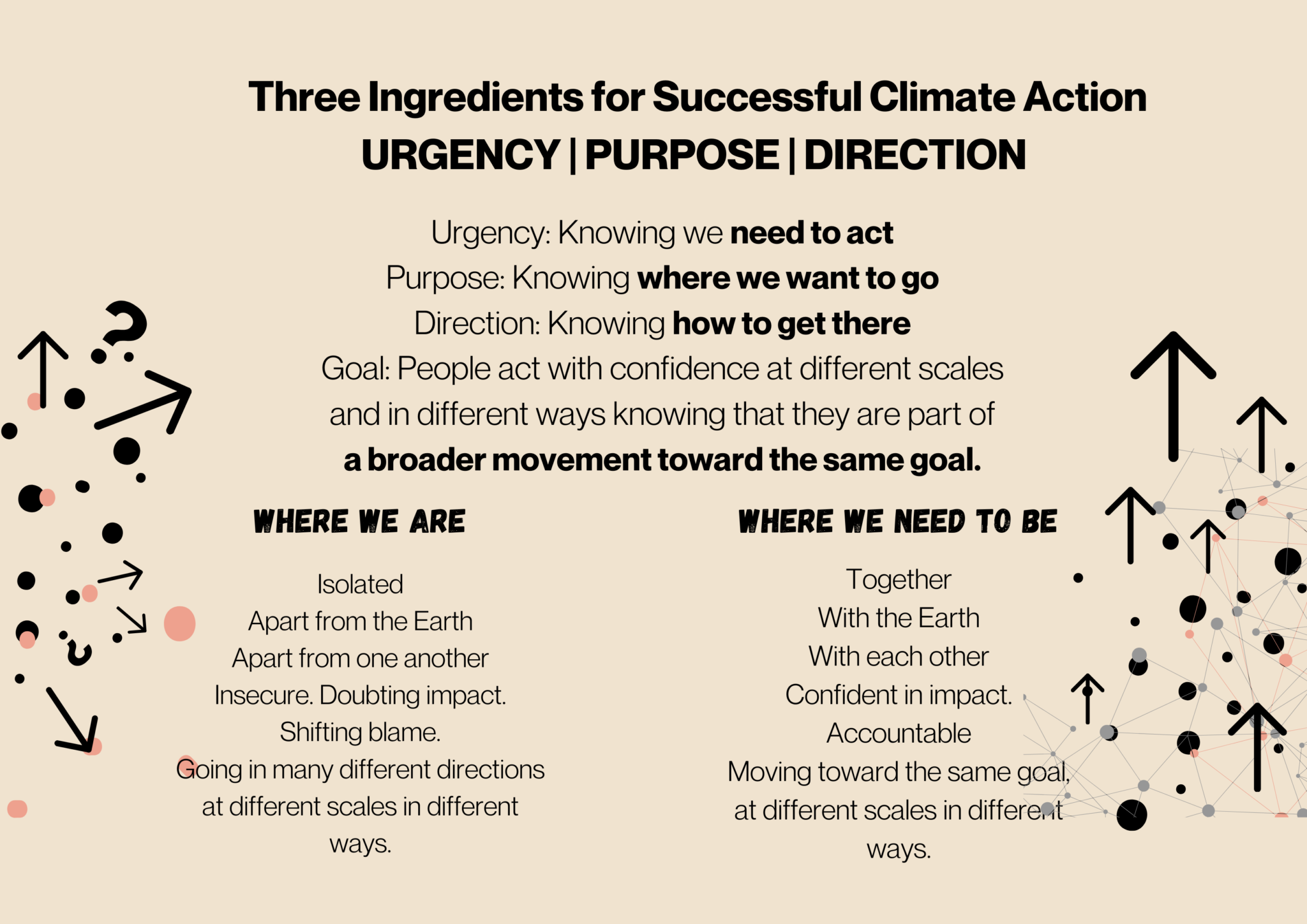
Successful climate action needs to be flexible, non proscriptive, and adaptable to all sectors. It needs to be able to shrink or grow. It needs to be participatory, doable and possible, as well as stretching the limits of the human imagination--much as we have stretched the limits of Earth's systems. Change needs to be both global and tied to place. It needs to embrace the imperfect so long as the imperfect takes us on the path toward our goal.
Project Regeneration and Project Drawdown are premier organizations that are guiding climate action at scales from local to global. Check out their work by clicking the buttons above.
Regeneration, Not Extraction!
How can we give back to the planet instead of only taking from it? The resources below explore regeneration as the premier way to shift your thinking in order to give back to the earth.
Read our two nutshell books below to learn more about Regenerative Approaches!